
Johnson County Court Records After Arrest
After an arrest in Johnson County, the first public record many people see is not a court record. It is the sheriff's jail roster entry. The official Johnson County Sheriff's Office arrest inquiry page links to the InteropWeb roster and warns that the jail list changes as people are booked and released. That roster can help locate a person in custody, but it is not the certified court file. The case record begins when charges are filed, heard, amended, diverted, or disposed in the court system.
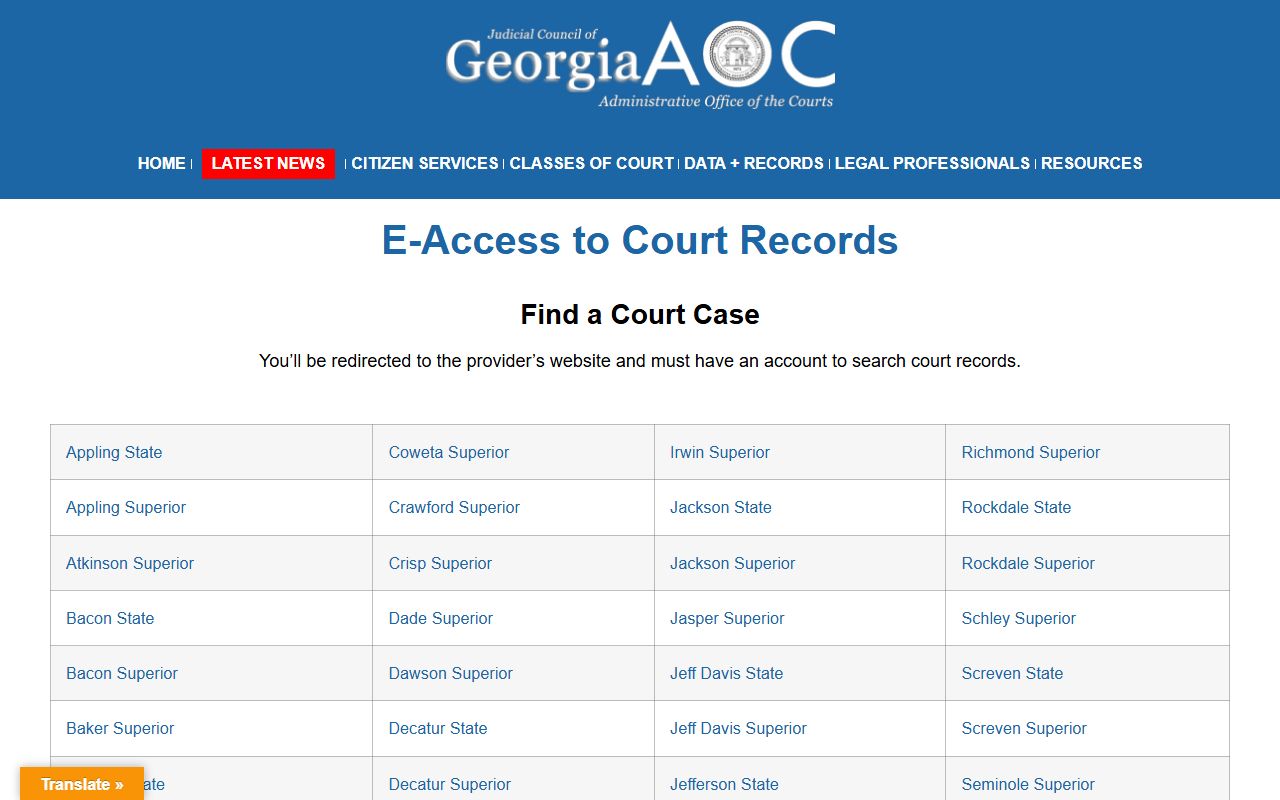
The local court access path starts with the Johnson County Clerk of Superior Court. The county page lists Clerk Patricia Glover, 2557 East Elm Street, Wrightsville, GA 31096, phone 478-864-3484, fax 478-864-1343, and mailing address PO Box 321. Court users can also start at Georgia Courts E-Access, which routes Johnson Superior records to PeachCourt and notes that account access may be required through the provider.
For custody and booking data, use Johnson County jail inmate records. For the county's booking-photo limits, use the Johnson County jail mugshots page. The court record has a different job: it tracks filings, case numbers, warrants, bonds, charge status, hearings, and disposition.
Johnson County Court Access
The clerk is the local starting point when a Johnson County arrest has become a court case. Superior, Juvenile, and Magistrate court references appear in high-authority clerk listings, while roster entries may also show court labels such as Magistrate Court or Probate. Those labels help point the search in the right direction, but they do not prove final status. The clerk or provider record should be checked for the filed case and any later order.
The official clerk page below is the county source for court office contact information. It is useful when a case number is unknown, a certified copy is needed, or PeachCourt access does not show enough public detail.
Johnson County publishes Clerk of Superior Court contact information for court records and local filing questions.
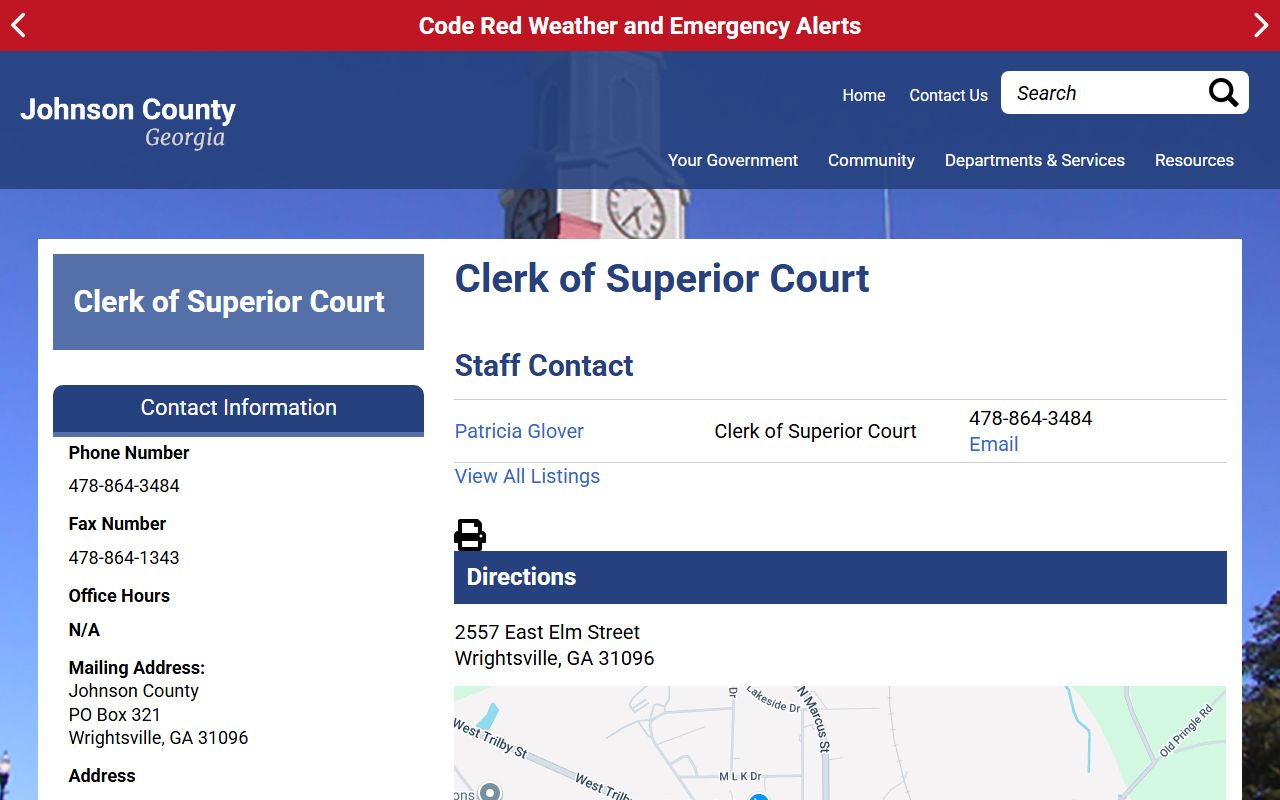
The contact details matter because Johnson County's online court path may require provider account access, while the clerk remains the local office for case-file questions, copy requests, and court-specific routing.
Johnson County Clerk of Superior Court
2557 East Elm Street
Wrightsville, GA 31096
Mailing: PO Box 321, Wrightsville, GA 31096
478-864-3484
Fax: 478-864-1343
Find Court Records After Arrest
Johnson Superior users are routed through Georgia Courts E-Access to PeachCourt. The public PeachCourt page shows login, registration, and password recovery, not an open anonymous Johnson County search form in the reviewed material. For that reason, the safest public instruction is to start with E-Access, create or use the required provider account if needed, and contact the Johnson County Clerk when the record cannot be found through the provider path.
Georgia Courts E-Access lists provider routing for court records and tells users that account access may be needed after redirection.
Use the roster only as a bridge. A name, arrest date, warrant number, court label, or charge description from the jail record can help narrow the court search, but the court case should be checked on its own.
- Check the Johnson County roster entry for name spelling, arrest date, warrant number, court label, and charge description.
- Use Georgia Courts E-Access for the Johnson Superior route and follow the provider registration or login requirement if shown.
- Search or request by defendant name, case number, citation, warrant number, or date range when the provider or clerk allows it.
- Review the docket, charging document, bond order, hearing activity, and final disposition instead of relying only on the first jail charge.
- Call the Johnson County Clerk when a certified copy, older file, or unclear court assignment is involved.
Arrest Records Versus Court Records
A Johnson County arrest can create several records in different offices. The sheriff's jail roster shows custody and booking data. An arresting-agency record may include an incident or offense report, subject to Georgia Open Records Act limits. The court record is the case file, where charges, bond orders, hearings, filings, dispositions, and restrictions are tracked. A state prison record, if a person is later sentenced to Georgia custody, appears in the Georgia Department of Corrections system rather than on the local jail roster.
| Record | Where It Usually Lives | Johnson County Use |
|---|---|---|
| Jail roster record | Johnson County Sheriff's Office and InteropWeb | Current custody, recent arrest, bond field, charge grid, and warrant number clues. |
| Arrest or incident report | Arresting law-enforcement agency | Requested under open-records rules, subject to exemptions and pending-case limits. |
| Court case record | Johnson County Clerk, court, and provider path | Filed charge, case number, bond orders, hearings, pleadings, and disposition. |
| State prison record | Georgia Department of Corrections | Post-conviction custody, sentence, institution, and offender profile if transferred to GDC. |
Johnson County Charging Documents
Booking charges can change after review by the prosecutor. Johnson County is served by the Dublin Judicial Circuit District Attorney, whose official site identifies Harold McLendon as District Attorney. The DA's role matters because the arrest charge in the jail record is not always the charge that moves forward in court. A prosecutor may file, amend, reduce, divert, dismiss, or decline a charge depending on the law and evidence.
| Document | Who Uses It | What It Means After Arrest |
|---|---|---|
| Complaint | Law enforcement, prosecutor, or court process | Starts or supports a charge at the early stage, often near arrest or first appearance. |
| Accusation or information | Prosecutor | States the charge the prosecutor files without grand-jury indictment in eligible cases. |
| Indictment | Grand jury | Formal felony charging document returned after grand-jury action. |
Georgia terms can vary by court and case type, so the filed document should be read with the case docket. The charge grid on the roster can include Warrant#, Counts, Statute, Description, M/F, and Court, but it is still a jail custody field.
Johnson County Charge Status
Charge status is one reason court records after a jail arrest must be checked separately from the roster. A charge can be pending while hearings are scheduled, amended when the prosecutor changes the filing, reduced as part of negotiation, dismissed by order, or marked nolle prosequi when the prosecutor does not proceed. The Dublin Judicial Circuit DA also describes Post-Arrest Redirect as a pretrial intervention and diversion program under O.C.G.A. 15-18-80 for eligible Superior Court participants.
| Status | Plain Meaning | Why It Matters |
|---|---|---|
| Pending | The court case or charge has not reached final disposition. | Bond, hearings, and conditions may still change. |
| Amended or reduced | The filed charge changed from the initial wording or level. | The final court record may differ from the first jail roster charge. |
| Dismissed | The charge was ended by court action or approved case result. | It is not the same as a conviction. |
| Nolle prosequi | The prosecutor chose not to proceed on that charge. | It can occur after review, diversion completion, or other case action. |
| Convicted | A guilty plea, verdict, or adjudication was entered. | Sentencing, probation, jail, or GDC custody records may follow. |
Bond Warrants and Holds
The roster can show Total Bond values, including dollar amounts, NOT SET, or DENIED. It can also show warrant-related fields and descriptions such as bench warrant, probation violation, holding for another agency, or housed for agency. Those details are useful, but they do not replace a court or sheriff check. Johnson County did not publish a separate active-warrant list, public warrant-search app, or official most-wanted warrant tool in the research file.
When a warrant or hold appears, treat it as a call-first issue. A public roster entry does not say whether a warrant has been recalled, served, cleared, sealed, or replaced by a later court order. The official local channels are the Johnson County Sheriff's Office or Jail at 478-864-4003, the Johnson County Clerk at 478-864-3484, and the Georgia Courts E-Access or PeachCourt route for filed court activity.
Note: A roster warrant field is a clue for follow-up, not a complete active-warrant database or legal status certificate.
Charges vs Convictions
An arrest and charge are accusations, not proof that the person was convicted. The sheriff's roster itself includes a presumption-of-innocence warning through the official arrest-inquiry context. Court records after an arrest should be read for disposition before anyone treats the charge as a final result. That is especially important when the Dublin Judicial Circuit DA can use diversion, dismissal, nolle prosequi, or amended charges in eligible cases.
| Point | Charge | Conviction |
|---|---|---|
| Stage | Filed accusation after arrest or investigation. | Final result from plea, verdict, or qualifying adjudication. |
| Where Found | Roster charge grid, warrant record, complaint, accusation, or indictment. | Court disposition, sentencing order, GBI criminal history, or GDC profile after sentence. |
| Can Change | Yes, through amendment, reduction, dismissal, diversion, or nolle prosequi. | Can be appealed, restricted, or affected by later orders, but it is the case outcome. |
| Use Caution | Do not treat as guilt. | Verify with the court or official criminal history source. |
Sealed vs Expunged Records
Georgia uses record restriction language rather than the broad public phrase "expungement" for many criminal-history limits. The GBI record restriction page cites O.C.G.A. 35-3-37 and explains that the arresting agency starts the request, the prosecutor reviews it, and approved records are forwarded to GCIC. That process can matter after a dismissal, eligible disposition, or other result that changes public access.
| Point | Sealed or Restricted | Expunged |
|---|---|---|
| Georgia wording | Georgia often uses record restriction under O.C.G.A. 35-3-37. | Expunged is a common public term, but it is not always the precise Georgia process. |
| Visibility | Approved records may be limited from normal public criminal-history access. | Do not assume every agency copy is destroyed unless an official order says so. |
| Who reviews | The arresting agency starts the request and the prosecutor reviews it. | The same official record path should be checked before using the broader term. |
| Public search result | Public portals may not show restricted records or sealed court files. | An absent public result is not proof that no arrest, case, or agency file exists. |
Juvenile matters, restricted records, pending investigations, and sealed court files may not appear in public searches. Georgia criminal history records, as described by the GBI criminal history FAQ, can include identification data, arrest data, charges, final judicial disposition data, and custodial information if incarcerated in a Georgia correctional facility.
Johnson County Record Limits
Georgia public-record access is framed by the Georgia Open Records Act, O.C.G.A. 50-18-70 et seq. The Governor's Open Records page gives statewide context for public-record requests, but Johnson County did not publish a dedicated sheriff open-records portal or booking-record fee schedule in the reviewed sources. A request should identify the person, date range, agency, record type, and whether inspection or copies are sought.
The same caution applies to background checks. These pages are not consumer reports. Employment, tenant screening, credit, insurance, and other FCRA-covered decisions require compliant sources and procedures. For court use, bond status, warrants, sealed records, or criminal-history questions, verify with the originating office before relying on search results.
Important: Do not use casual court, roster, or custody searches for FCRA-covered screening or as a substitute for official court verification.
Public Record Search
Sponsored Results